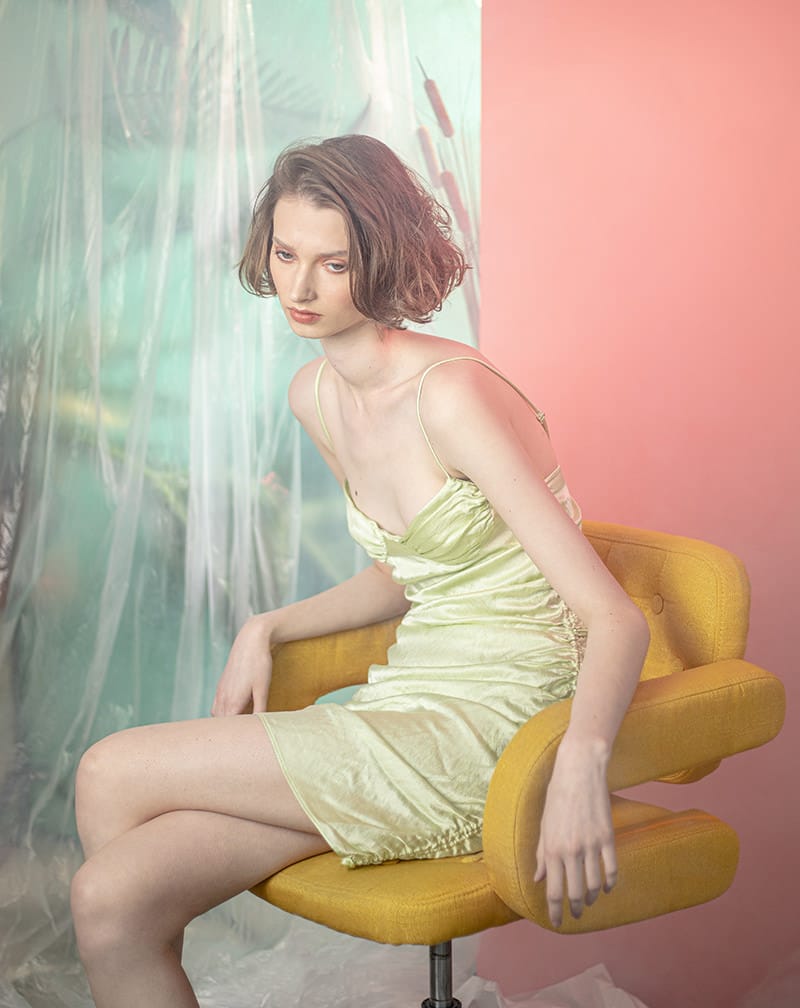
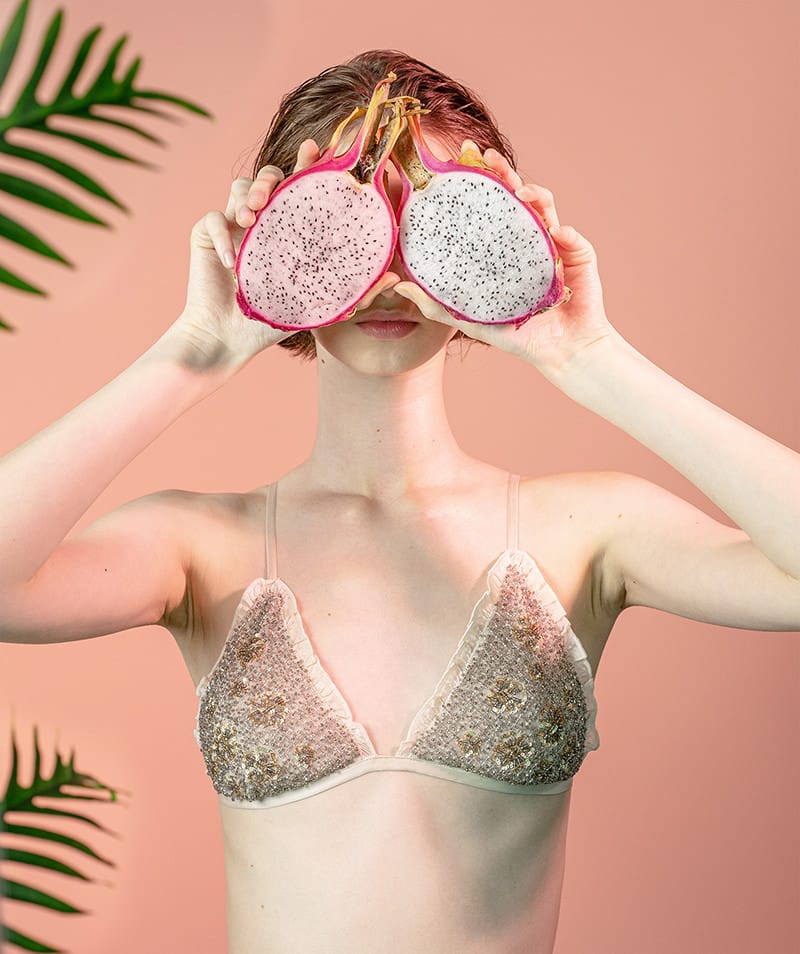
A graphic designer who left the screen for her father’s analogue camera and photographs women.
Who are you, and how are things going?
I’m doing very well, thank you. I spend my time taking photos and travelling, so I couldn’t be happier. For now I live in Nantes, a city on the west coast of France. I studied graphic design and worked in several places before I got bored of spending all day behind a screen. So I decided to dedicate myself to my first love, which is photography.
How did you discover photography, and when did you know it would be part of your life?
I discovered photography as a child, because my grandfather shot film and made silver prints in his bathroom.
You couldn’t call it an initiation, that would be stretching it, because I was really small. But I think I understood at the time that the process held a certain magic.
Later my grandmother gave me a Polaroid, and I had fun photographing my cat, my sister and my dolls, inventing little scenes.
I realised it would become part of my life ten years ago, when I decided to study graphic design. I realised at the same time that having art in my life made me happier than anything else.
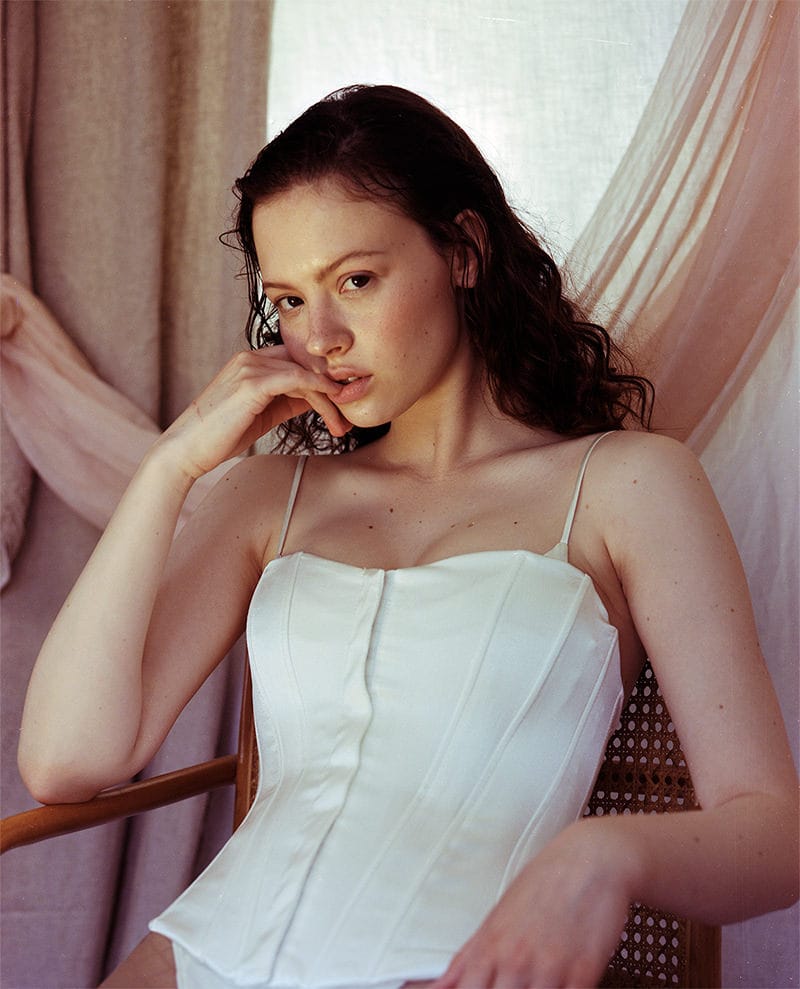
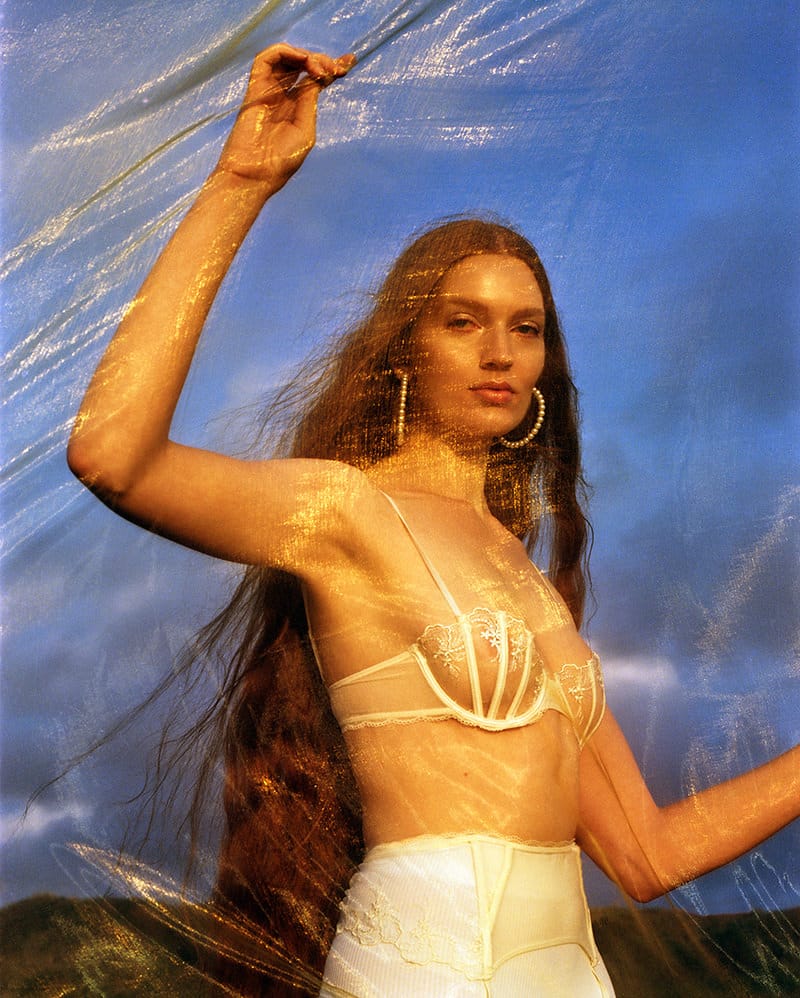
How were your first years? How long did it take to find your style?
My first years weren’t easy, because I had to practise a lot before I got results I was proud of. At the beginning I wasn’t really satisfied with what I was making.
At first I bought a digital camera, but I didn’t like the result at all. It was too cold, too perfect for me; it didn’t seem to reflect the world as I saw it.
So I got my first analogue camera from my dad, who is a photojournalist, and it took me years to learn how it worked. At the time everyone around me was shooting digital and nobody understood my choice, so I had to figure it out on my own.
I was so happy when I started getting results, maybe after two years of experimenting. Then I tried to find my own style, and I’m still working on that part.
I’ve always loved photographing women and reclaiming what patriarchy took from us: the representation of our bodies. I don’t consider myself a feminist activist, but I do my best to be honest in my approach.
What does a typical day look like?
My typical day is never the same as the day before. Sometimes I like to walk by the sea, sometimes I like to watch films. I’m not always looking for inspiration, but I like to be in a good mood so I can come to my work calmly.
So it comes down to alternating intense work with moments of calm.
What advice would you give your younger self?
Persevere, grow, don’t rush, surround yourself with positive people, and be ambitious.
And your strongest work so far?
I think my strongest work has been Silent Fight.
Tell us the story behind it.
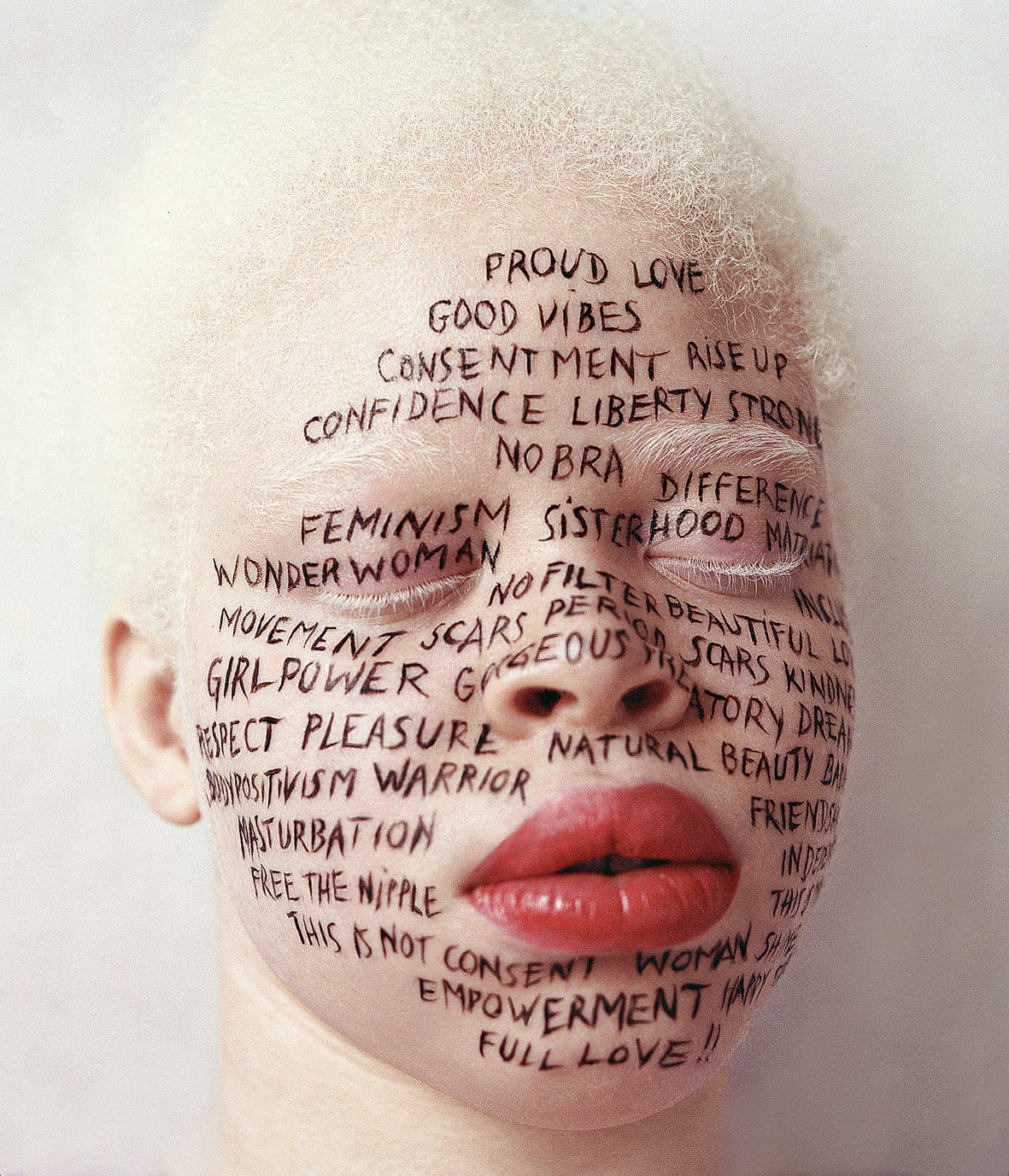
I’ll choose Silent Fight, because it was difficult to plan the project with Covid.
We rescheduled the shoot many times, but I was certain it mattered more to me than anything and that I had to do it. It was a big feeling.
Meeting my model, Reine, was one of the most beautiful photographic encounters I’ve had.
The first part of the shoot was more of a fashion and beauty session, and we were supposed to shoot the feminist work the next day with an illustrator friend.
At the end of that day I called my friend to say I was exhausted and that maybe we wouldn’t shoot the feminist part, and she told me: absolutely not, we have to do this.
And that’s how my most popular work began. I’m still very proud of it.
What does photography mean to you?
Photography is like therapy. When I take photos it’s like meditating: I’m one hundred per cent in the present moment and I think of nothing other than satisfying the need to create.
Where does your inspiration come from, and is there a photographer you’d like us to interview?
Mostly from films. I like that you can focus on different decades and be influenced by any kind of hair, style and so on.
I love directors like Sofia Coppola, Agnès Varda, Rohmer, Truffaut, Jacques Demy.
Recently I loved Ryūsuke Hamaguchi’s last film, Wheel of Fortune and Fantasy.
I also love looking at people in the street and imagining their lives.
And of course I’m inspired by photographers: Craig McDean, Diane Arbus, Deborah Turbeville, Sarah Moon. I would love you to interview Lee Miller, which may not be easy, since she is dead.
What’s next?
We’re almost into summer, so I think I’ll focus on enjoying my friends, listening to music and swimming in the sea. I really need to get out of my head after all the work I’ve done this year, and take a step back.